


- by Anton Pavlovici Cehov
- Translation: Elisabeta Pop
- Directed by: Dominic Dembinski
- Set Design: Eugenia Tarasescu Jianu
- Music by: George Marcu
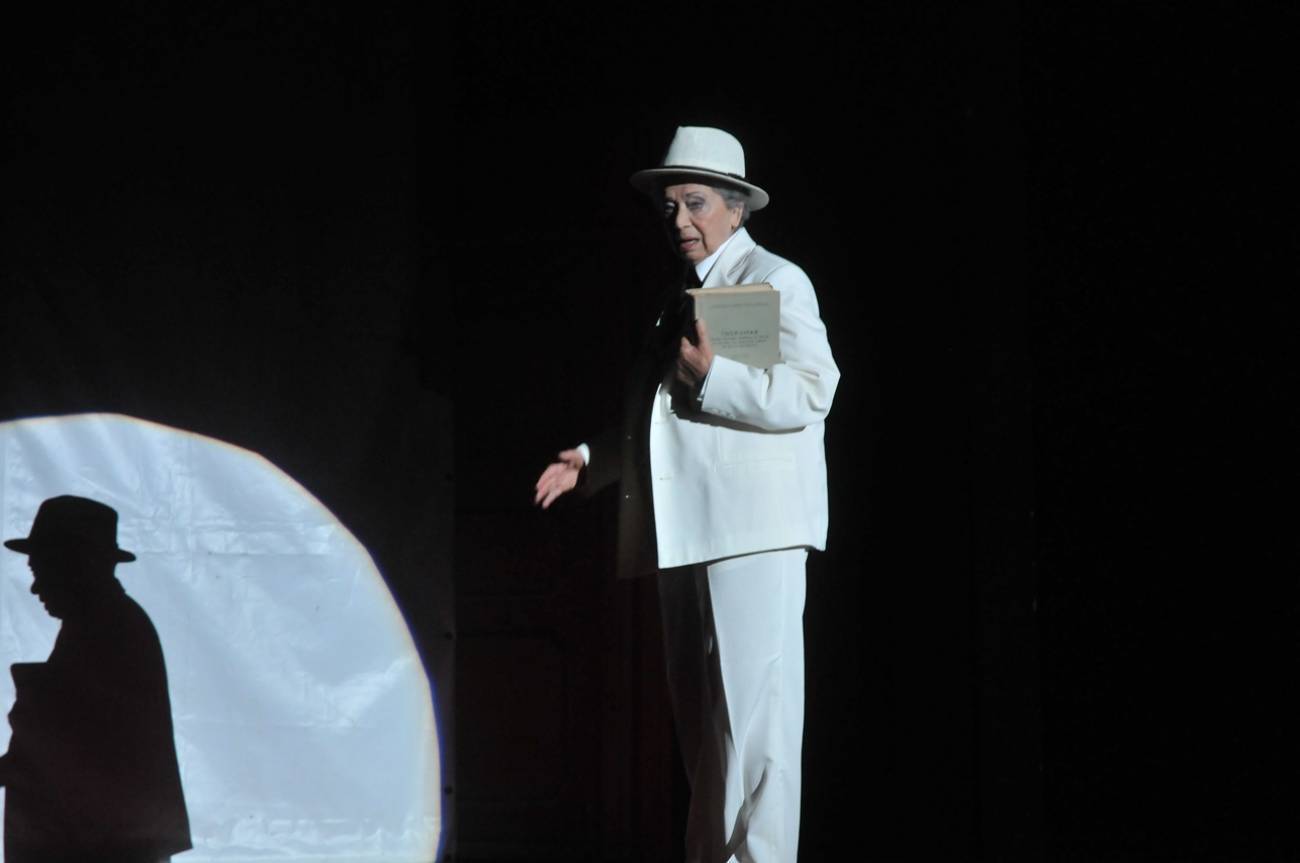
"In Moscow! In Moscow!” is the leitmotif cry of the three sisters, the heroines of the Chekhov drama, directed by Dominic Dembinski, at the State Theater Constanta. TVR production house, took over on stage, on the occasion of the 155th anniversary of the birth of AP Chekhov, this modern assembly, which transforms the house in the forgotten province of the world, into a dollhouse, where time expands to encompasses the history of the early twentieth century, with its Great Socialist Revolution of October as well.
Cast
- ANDREI PROZOROV: Remus Archip
- NATALIA IVANOVNA: Maria Lupu
- OLGA: Mirela Pană
- MAŞA: Dana Dumitrescu
- IRINA: Alina Manţu
- FIODOR ILICI KULÂGHIN: Liviu Manolache
- ALEXEI IGNATIEVICI VERȘININ: Adrian Dumitrescu
- NIKOLAI LVOVICI TUZENBACH: Marian Adochiţei
- VASILI VASILIEVICI SOLIONÂI: Iulian Enache
- IVAN ROMANOVICI CEBUTÂKIN: Bogdan Caragea
- ALEXEI PETROVICI FEDOTIK: Cosmin Mihale
- VLADIMIR KARLOVICI RODE: Andu Axente
- FERAPONT: Alexandru Mereuță
- ANFISA: Ileana Ploscaru
Photo Gallery




Reviews
"The lively play/carnival, a disjointed spectacle from the dollhouse, beyond the sexual playfulness of the Tuzenbach (Marian Adochiței)–Irina and Vershinin (Adrian Dumitrescu)–Masha couples, beyond the excellent monologue of the baron, beyond, therefore, the poetry of the cranes' flight and the beauty of the snowfall, the enchantment of the dance, is suddenly and threateningly shattered, like a future that certainly doesn’t sound promising, despite the utopia in which everyone floats (except for Natasha, of course), by Bobik’s voice from offstage. For, as it becomes clear at the beginning of the second act, we have ‘progressed’ (so to speak) about twenty years, and Natasha and Solionyi (Iulian Enache) are political officers of the Red Army, terrifying like the fire engulfing the town—a metaphor for the Marxist-Leninist-Stalinist auto-da-fé. Advancing through the text as through history (or perhaps vice versa?), Dominic Dembinski drives the actors at an increasingly hurried pace, in tune with the story of a 20th century tumbling like a jagged snowball into the valleys of a society more inclined toward dreams than pragmatism, even while playing at the theory of the vitalist charm of labor."
Doru Mareș, Yorrick, „Mașinăria (timpului) Cehov” 28 octombrie 2014