


- by Anton Pavlovici CEHOV
- Translation: Raluca Rădulescu (traducere și adaptare)
- Directed by: Andrei Măjeri
- Set design: Oana Micu
- Choreography: Andrea Gavriliu
- Sound Design: Claudiu Urse
- Lighting Design: Sabina Reus
- Stage Manager: Andrei Dermengiu
Liubov Andreevna Ranevskaya returns ruined, together with her daughter, Anya, to her family’s country estate, after several years spent abroad. The family no longer has the money to maintain the property and, in order to save their home and escape their debts, they must sell the cherry orchard, an act that is at first refused, but gradually accepted. Russia at the beginning of the 20th century is undergoing profound social changes, and the aristocracy, along with its hedonistic lifestyle, is on the verge of disappearing.
Andrei Măjeri, theatre director: “THE CHERRY ORCHARD proposes a reading of lives turned theatrical, a world in twilight. A collective ghost and a field of contradictions, a crossroads and a territory of the marginalized, Chekhov’s orchard is a final dance before disappearance.
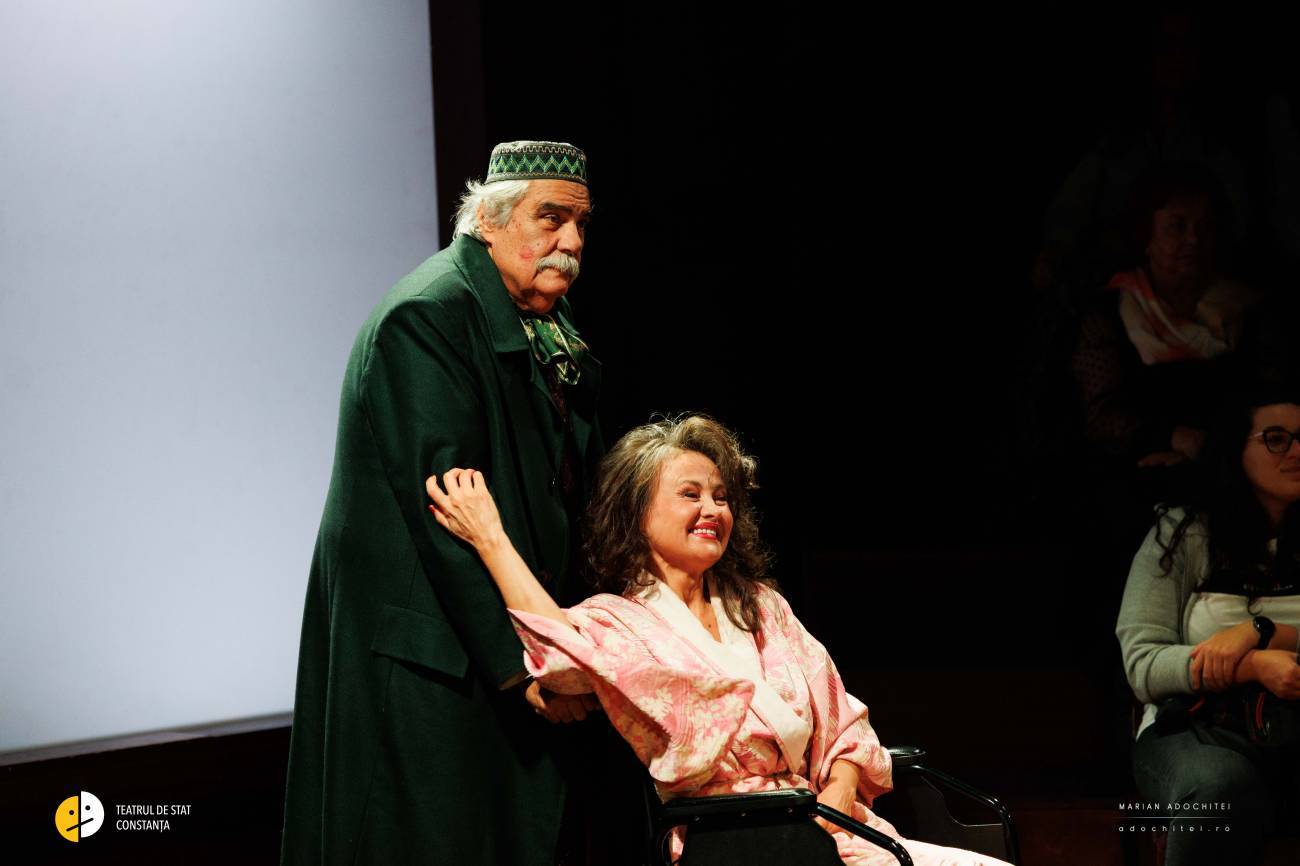
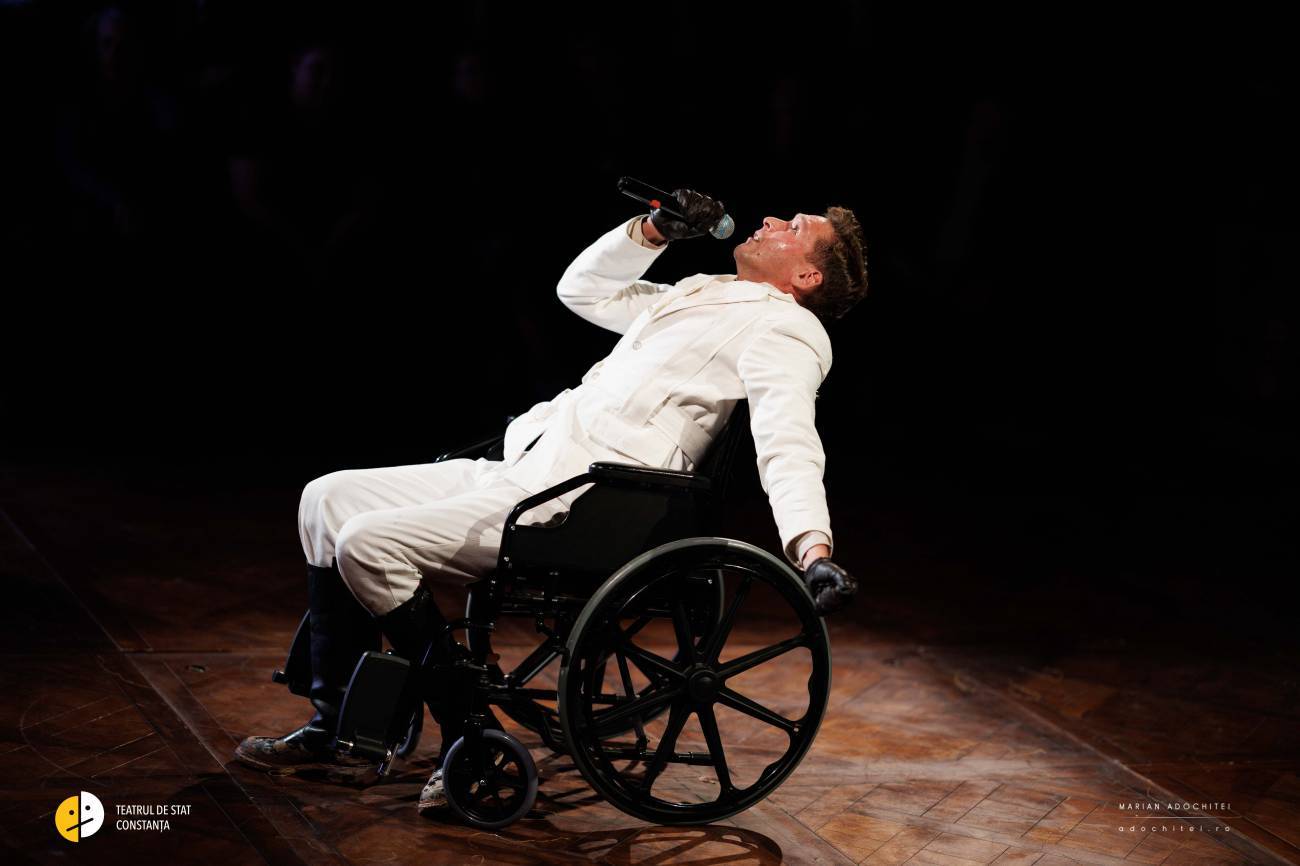
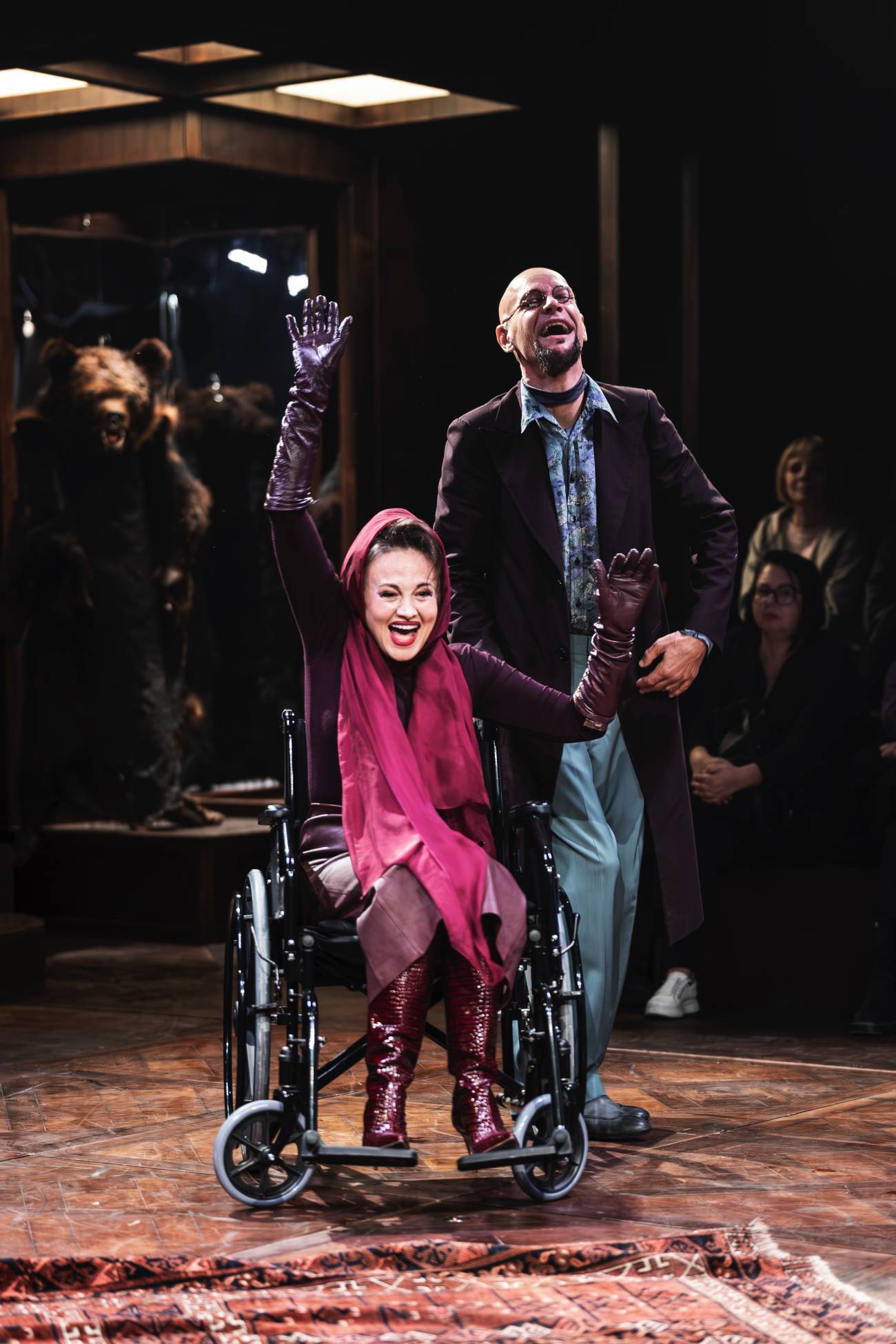
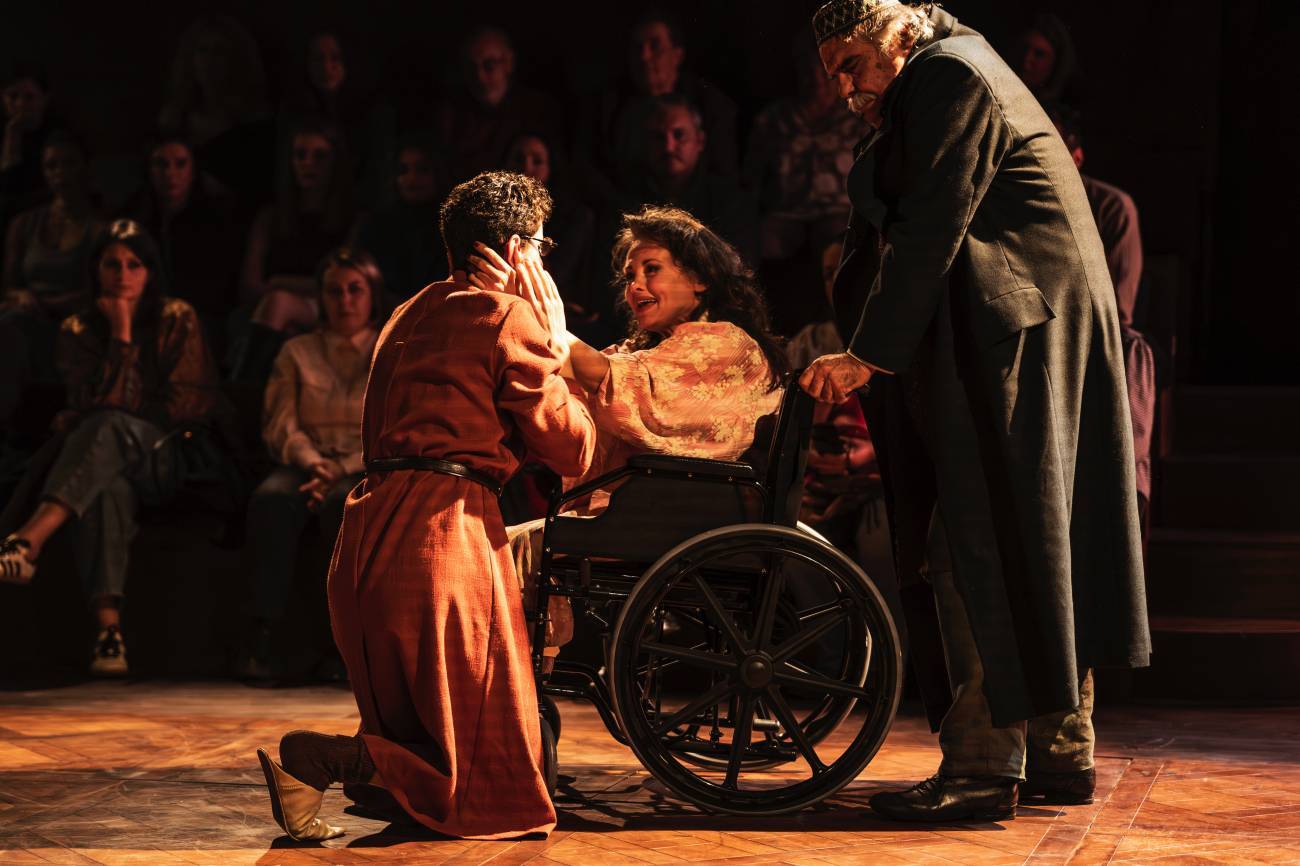
At the State Theatre of Constanța, I found the ideal place to tell our Orchard. I imagined a capsule-space, where the audience is immersed in the atmosphere of the house. Like a wardrobe-house, this place of passage is a space of silence, a cosmos of complicity. I called it THE CHEKHOV HOUSE. It carries marks of churches, of ships, of trains, ultimately revealing the ever-changing morphology of ‘the children’s room.’ Over the years I gathered small revelations about a potential staging of this seminal text: the audience on four sides, suitcase-floors, the bundles of Act II, the atypical appearance of the protagonist, the cultural clash between those who left and those who remained, and so on. Liubov Andreevna enters here as a stranger returning home, each element triggering painful memories. The children’s room is a room good only for dying in. In the hidden corners of this collapsing house, the family’s balance slips through her fingers. With a troubled past and an uncertain future, she behaves like a dethroned monarch, capricious and Bovary-like. Her acting is always ‘through tears.’ A queen cannot renounce being a queen, even in utter ruin.
And yet, the position of ‘main character’ is not firmly established, the place is instead occupied by the complex, profound, and irresolvable relationships among all the characters. Their consciences, stirred by questions and moral revolts, create permanent tremors. These exiles of fate seem to wear out their lives in speaking. Urgency drives them all: of faith, of returning, of status, of buying the orchard, of paying the debt, of falling in love, of luck, of social climbing, of changing the world, of love, of sleep, of death...
Their inner worlds are turned inside out, back and forth, here where the walls are us. Here, nothing is stronger than what has been saved. Here, you can cast one last look at the past, with a smile.”
Cast
- RANEVSKAIA: Cerasela Iosifescu
- ANIA: Cristiana Luca
- VARIA: Ecaterina Lupu
- GAEV: Liviu Manolache
- LOPAHIN: Ștefan Mihai
- TROFIMOV: Cătălin Bucur
- PISCIK/PASSERBY: Remus Archip
- EPIHODOV: Andrei Bibire ,Aurelian Culea
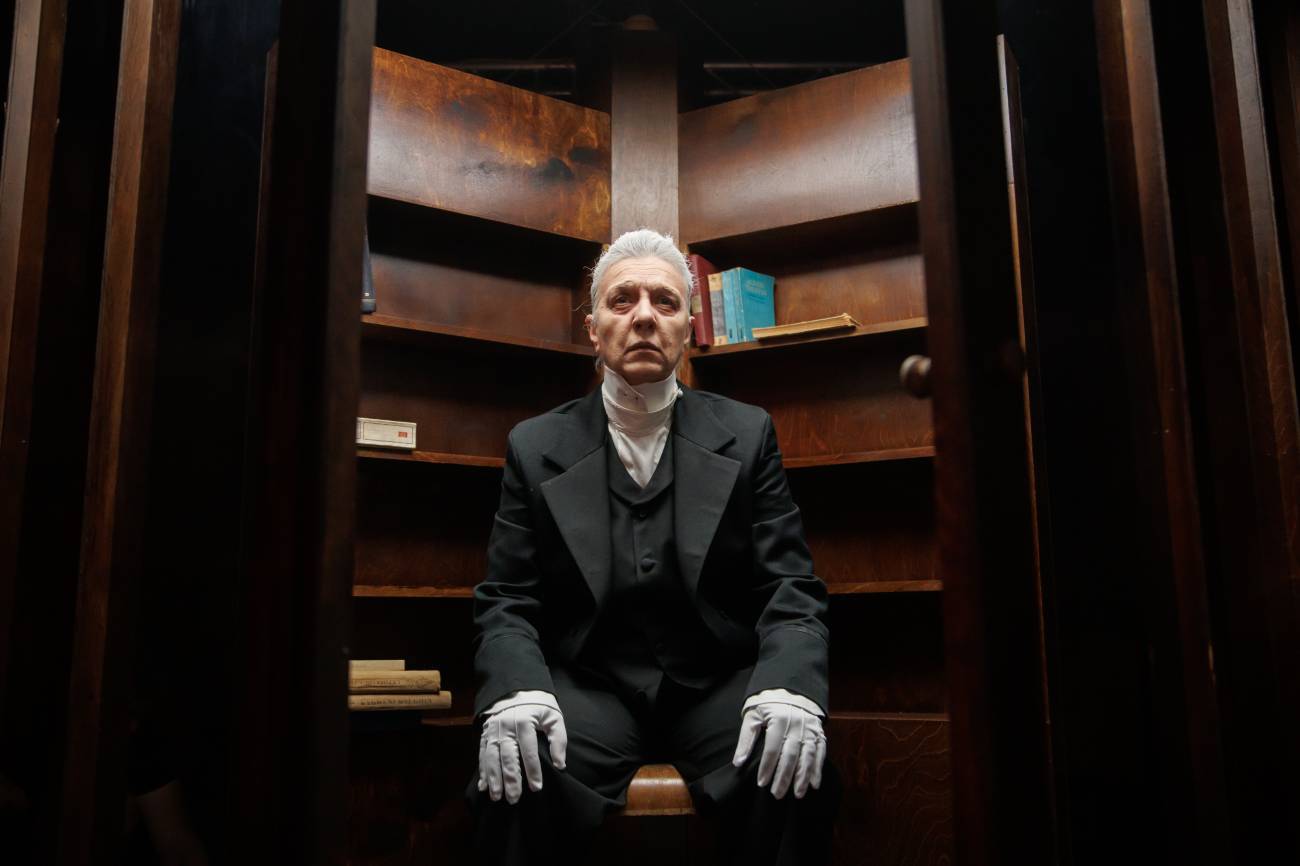
- FIRS: Mirela Pană
- DUNIAȘA: Ramona Niculae ,Ioana Cojocărescu
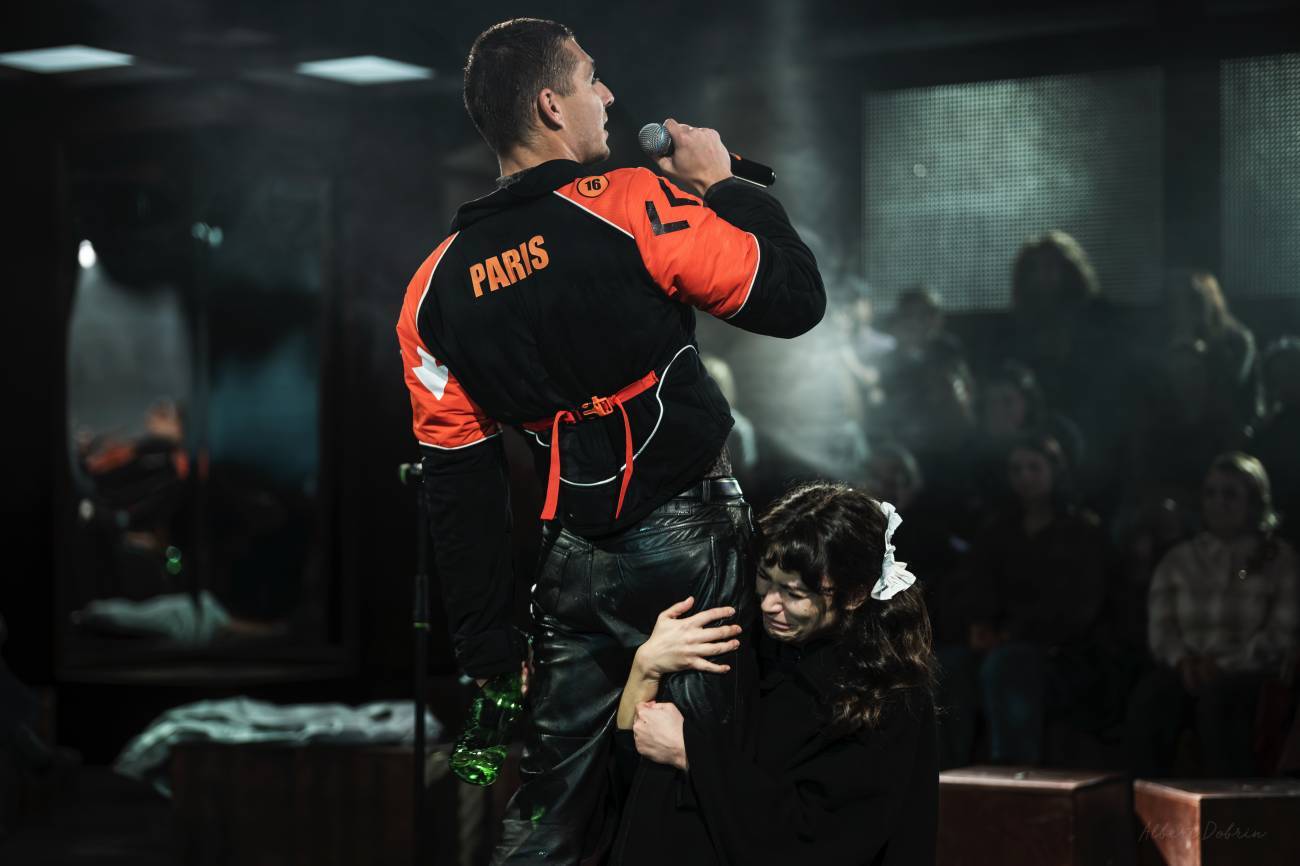
- IAȘA: Iustin Danalache ,Alex Iezdimir
Photo Gallery
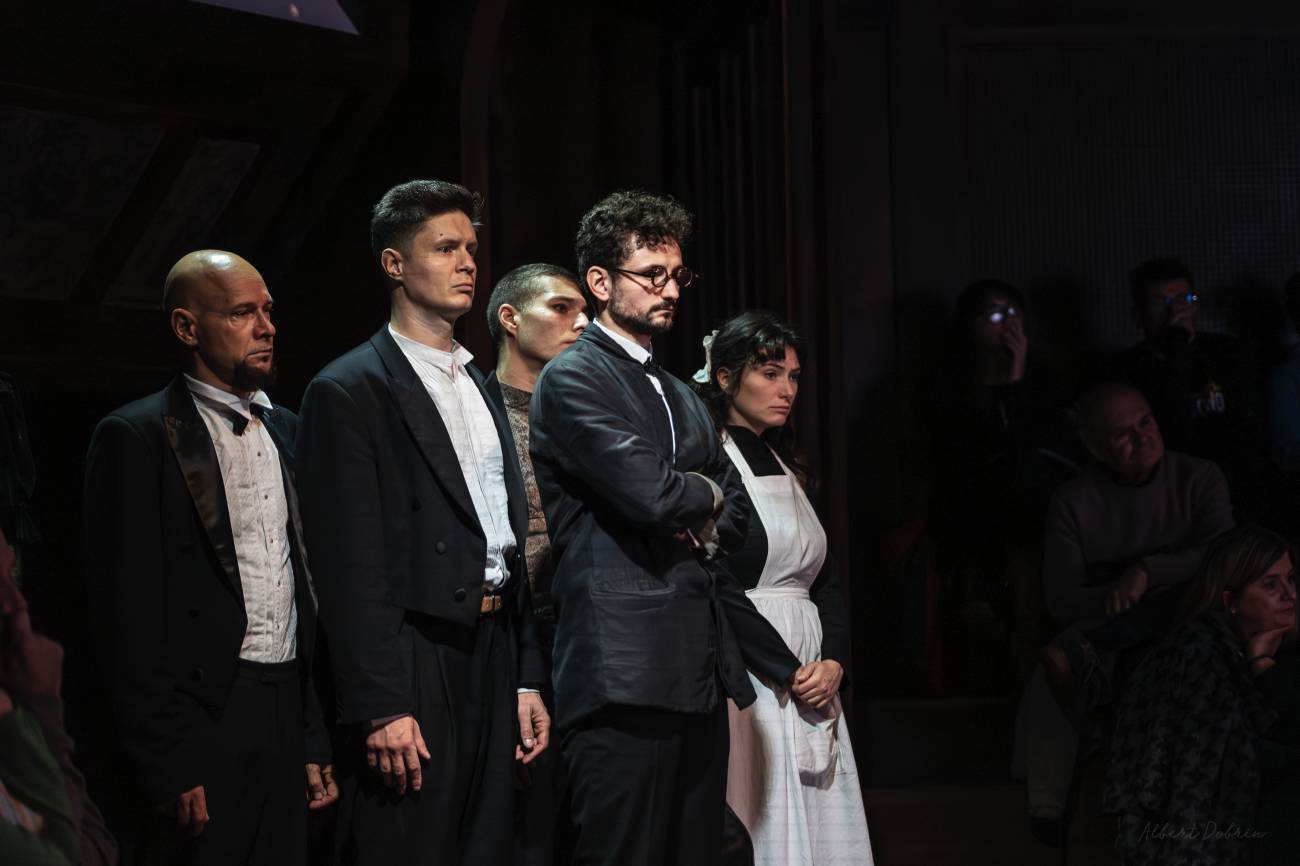
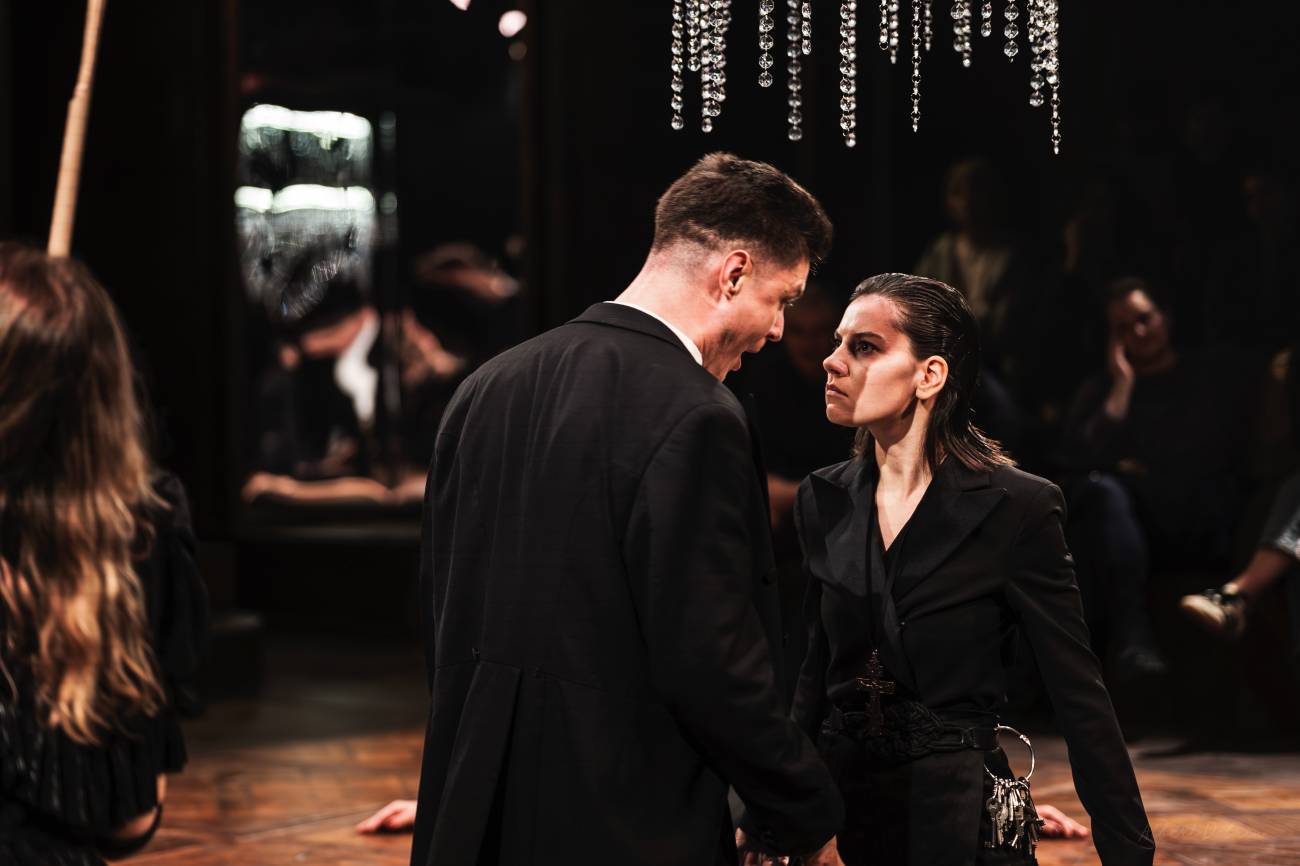
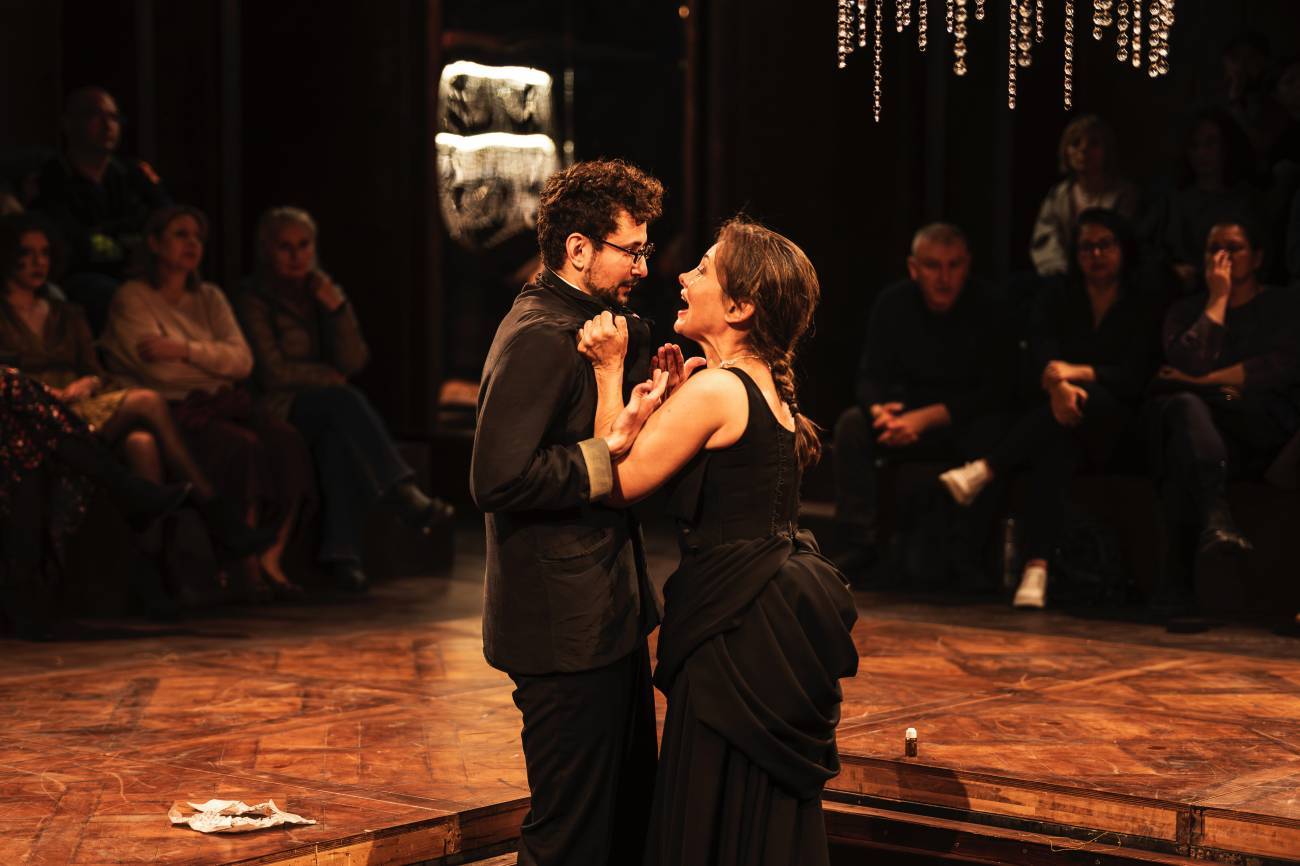
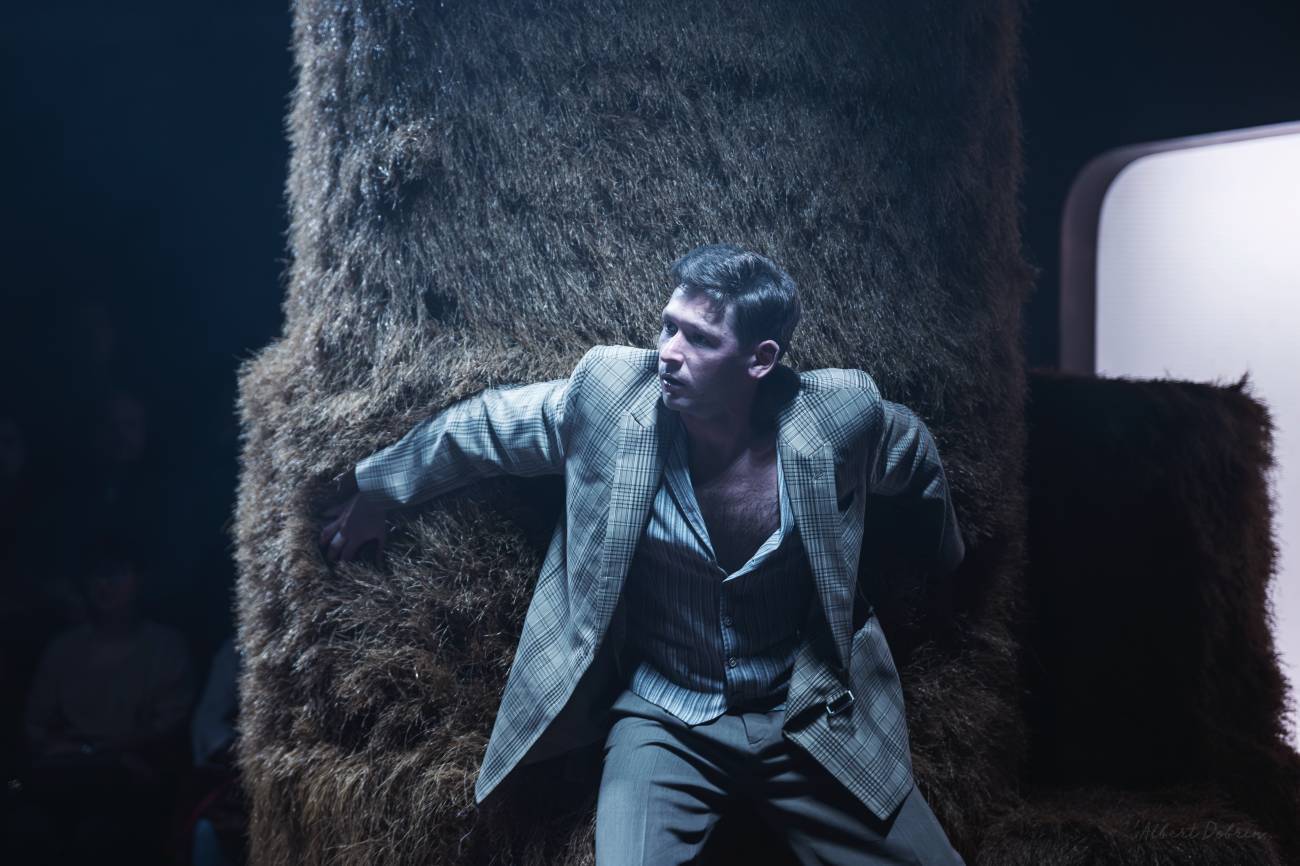

Reviews
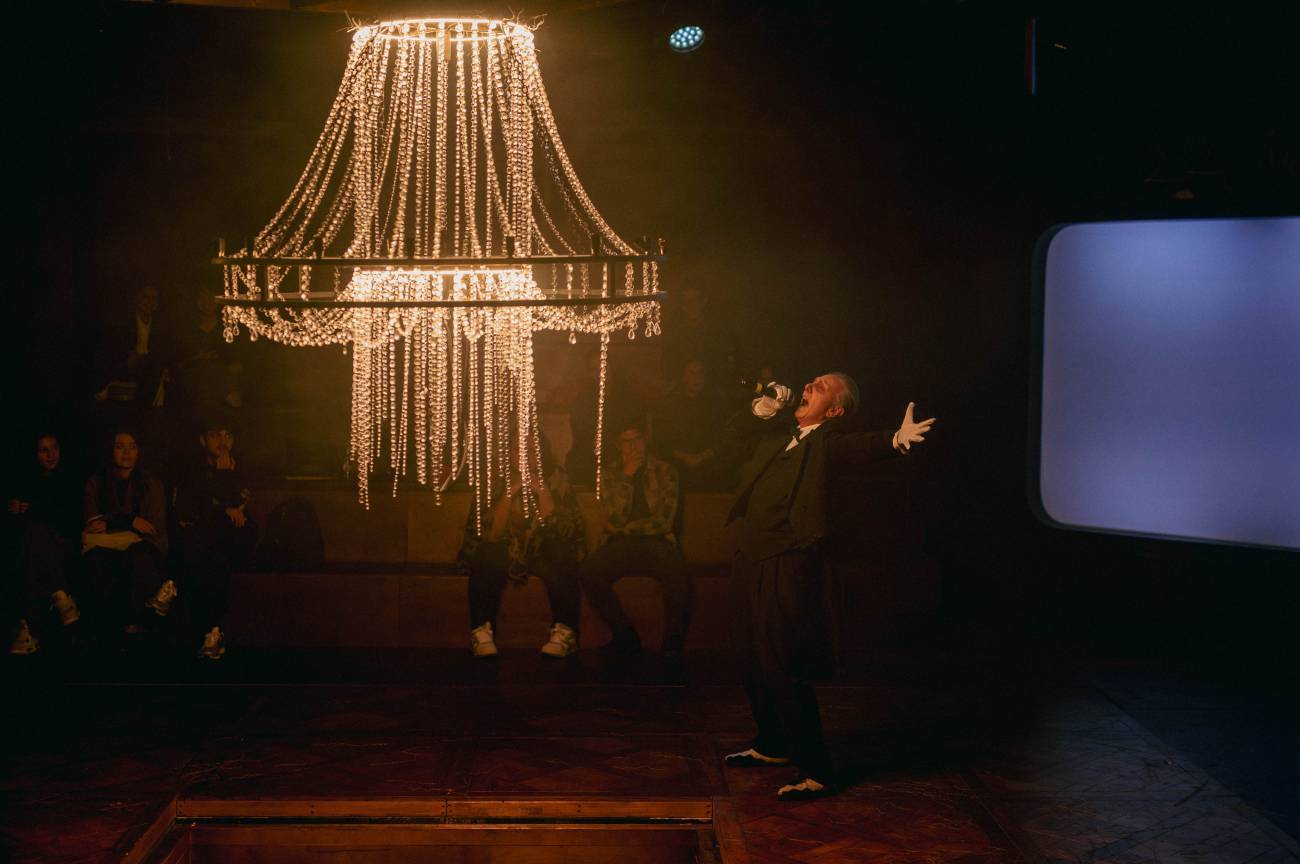
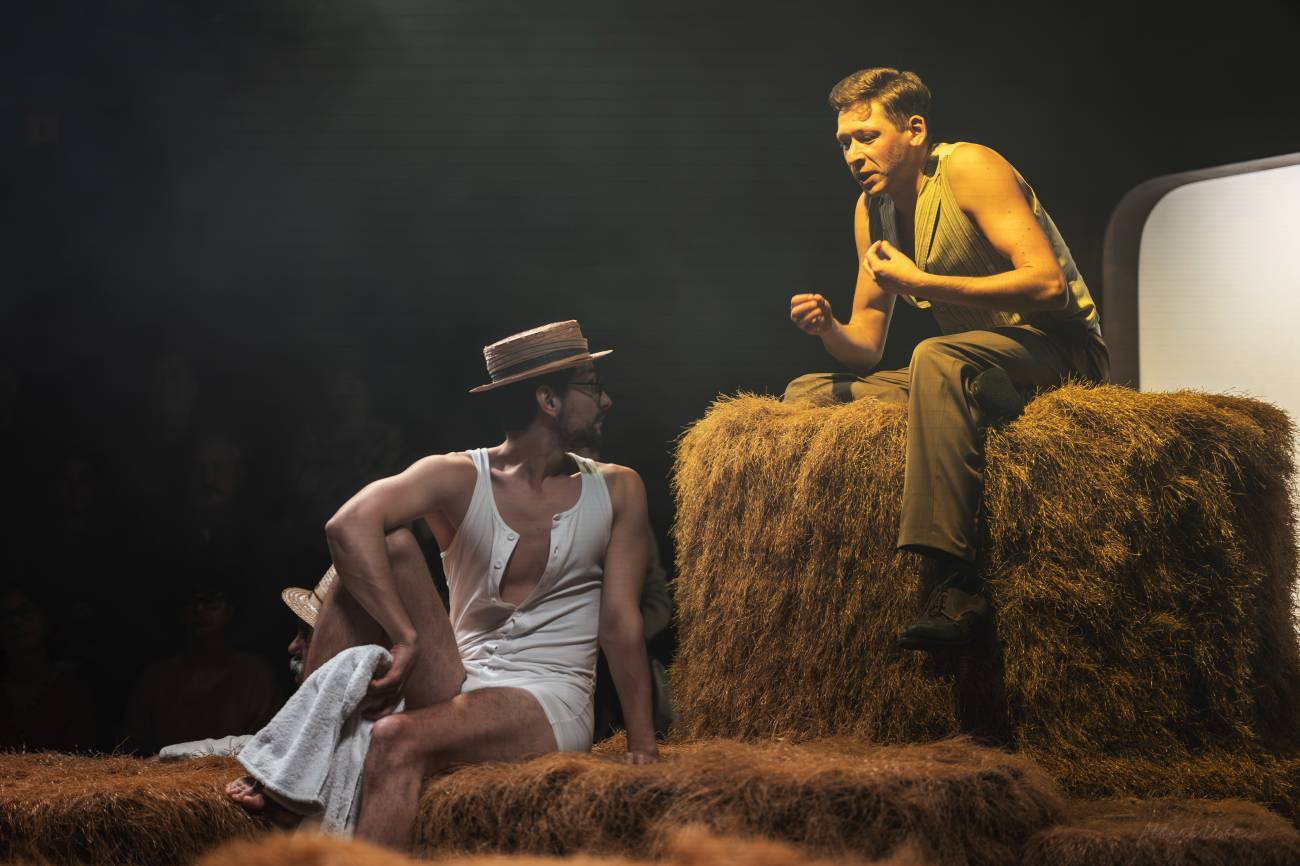
The staging of The Cherry Orchard by Anton Pavlovich Chekhov, directed by Andrei Măjeri at the Constanța State Theatre, is a performance of details that create a world. The universe imagined by Andrei Măjeri and brought to life brilliantly through Oana Micu’s scenography and Sabina Reus’s chiaroscuro lighting design, built in islands of light, proposes a familial microcosm enclosed within the walls of a history at a crossroads, one that must face the reality of the macrocosm beyond this circle of protection. The subtle dialogue between inside and outside, the whispers, rumors, distant music, sound transitions, entrances and exits from the conventional performance space, lays the groundwork for the dissolution of this lining, corroded by a historically transgenerational guilt. The four acts traverse the seasons and, at the same time, the ages of maturation imposed by a present that no longer has patience for decorum and calm. The orchard is never shown; we never see it behind the opaque window, only the characters evoke it. Its presence insinuates itself through the massive wood that surrounds you once you become a guest in Chekhov’s House, inside the Studio-BCR Hall. The material is warm, alive, and sober, it vibrates under the actors’ footsteps. The cadence of these footsteps personalizes each presence, and the rhythm of the heel, the boot sole, the patent shoe, the slipper, the bare foot, the crutch, or the wheel describes the inner life of the house-as-character, living through its final summer of vitality before being killed in the name of the future. [...] The actors’ performances are strengthened by clear, intuitive stage directions. Cerasela Iosifescu (Ranevskaya) is in full control of a deliberate theatricality; the affected coquetry and sickly femininity she uses as her only weapons, amid psychological and emotional decline and financial ruin, are modulated so that the drama shows through the mask of superficiality. Liviu Manolache (Gaev) employs a pedantic rhetoric matching the logorrhea of a man who shields himself with grandiose words from the inevitability of a life devoid of any practical sense. Ecaterina Lupu (Varya) builds the most original trajectory of a character lifted from the weight of cliché, with brave determination, she transforms Varya into a tragic heroine, and her ending, originally inferred by the direction from a coded cue in the text, offers the ground for a true acting performance. Ștefan Mihai (Lopakhin) compensates for his evident youth with an intensity that justifies an inner journey contorted between good intentions, humanity, ambition, the intoxication of power, and the voluptuousness of redeeming an inherited fate. Cristiana Luca (Anya) matures act by act, from a spoiled teenager into a disoriented young woman gathering courage before an uncertain tomorrow. Cătălin Bucur (Trofimov) is cerebral; through his glasses, it seems we can objectively observe this magnificent symbolic death. Remus Archip (Pishchik) brings the candor of an amateur clown transformed into the sincere sadness of his final monologue. Andrei Bibire (Epikhodov) has the physicality of an acrobat feigning clumsiness in order to endure a life of “misfortunes.” Mirela Pană (Firs) delivers a composition where neither the changed gender nor the advanced age are the coordinates that shock, they move us through the vital will born of loyalty and humanity, exploding spectacularly in song. Ioana Cojocărescu (Dunyasha) juggles frivolity and femininity as her only ticket to the future, yet with a single word, she encapsulates the very essence of women’s condition across centuries: “Right away.” It’s a docile, heartbreaking reply that gathers all helplessness and resignation. Alex Iezdimir (Yasha) embodies a seductive masculinity that fits him like soft skin, whether as the conceited macho or the calculating subordinate.
Alina Epîngeac - D'Epîngeac - Zvon de pași pe lemnul Livezii de vișini
https://epingeac.com/2025/10/13/zvon-de-pasi-pe-lemnul-livezii-de-visini/
…I’d say I dreamed Andrei Măjeri’s production of The Cherry Orchard at the Constanța Theatre. Something ethereal, volatile, ineffable, and then suddenly violent, brutal, wooden, concrete, and again, a kind of floating among all sorts of people I seem to know and not know, who seem real and unreal, in a space that feels interior and exterior at once, perhaps below, perhaps above… Exactly like in a dream... But no, it wasn’t a dream. It was The Cherry Orchard of a director who no longer starts from the classical idea of representing the cherry trees/the orchard, an obsession shared by nearly all who have staged Chekhov’s testamentary play, but rather from a theme of space. And space, for him, is reduced to the house: the house of a last category (social and perhaps human as well), a house that even the audience becomes part of, a house that turns into a fascinating emotional “home” throughout the hours in which we experience Chekhov’s text from within. Because more than witnessing a theatre performance, we constantly have the impression of partaking in a strange yet warm immersive experience. Măjeri himself seems, as a director, to be a character quietly inserted into the space, reporting on-site the unusual events through which a dying world passes. Directing from within the text, that’s a subject worth meditating upon, fundamentally different from the eternal mise-en-scène; in Chekhov’s case, I’ve encountered it before only with Radu Afrim, in Three Sisters. The level of intimacy in this staging is the primary effect of such a direction, one that insinuates rather than explains, that ambiguates rather than clarifies. Now, the house is more important than the orchard, as if the orchard were one of those specifically Chekhovian diversions meant to shift attention away from what truly matters. [...] Oana Micu’s set design is an adventure in itself. At first, we become familiar with its surfaces, the wooden reliefs (cupboards, hints of outdated parquet), then we discover its deeper layers, with structures that detach (suitcase-cubes), with hiding places that surprise us, vitrines of human or object exhibits, with dynamics that protect it from the risk of turning the stage into a museum, with a chromatic range constantly heavy, diffused, and so profoundly Chekhovian in its essence… A sunken décor that we gradually find ourselves claiming as something familiar, personal. A screened window suggests an “outside” where the orchard we’re told about might be. A deceptive suggestion, because the orchard is also inside, embedded by default in the house, organically etched into the century-old cupboards and, most of all, into the cherry-people, the cherry-destinies… At moments, this inner orchard felt so vivid to me that, and yes, this is a consciously assumed overinterpretation, the audience, seated around the stage, comes to embody the metaphor of the orchard. Spectator-cherry trees, part of a drama that ought to trouble them too…
Călin Ciobotari - 7 Iași.ro - Casa Cehov din Livada lui Măjeri
https://www.7iasi.ro/casa-cehov-din-livada-lui-majeri/?fbclid=IwY2xjawN2sGBleHRuA2FlbQIxMQABHuVlSUESETtY8N6frAn6QX1RRkObeQK8aGOZFZt0SxhPBXnLY8G2F4Hek82X_aem_8jGaes8vZTT6l6CmItRX9g
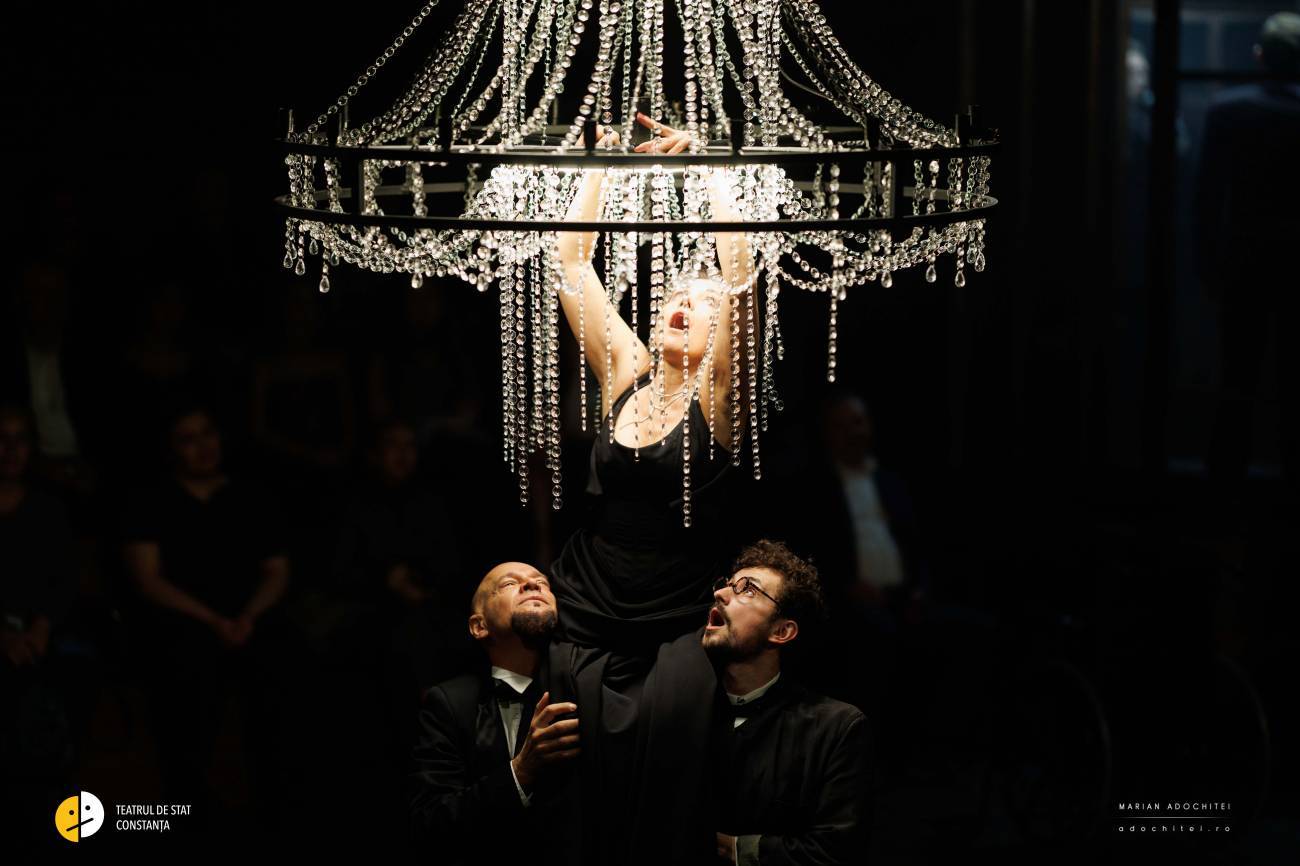
I think this is one of the best stagings of Chekhov’s play I’ve ever seen, and at the same time it feels extremely fresh. From the cultural conflict between generations, to neuroses, to Chekhov’s gun (read: the bear fur), and the children’s room “just right for dying,” everything finds its place inside the Chekhov House. This immersive universe, in Oana Micu’s scenographic vision, gives The Cherry Orchard strong realist-psychological undertones. Okay, I sound like a Romanian teacher now, even though this text isn’t studied in high school (sorry, Chekhov, you’re not canonical, no slay for you), but everyone associates his name with psychological realism, and this play defines that perfectly. Until now, whether I read the play or saw different productions, the main character was always the orchard itself. In this seaside production, however, I think that although the orchard still exerts its obsessive pull over the actors, the true protagonist becomes the manor house. This capsule-like space is something the characters desperately try to escape of their own will, yet cannot detach from when they are forced to. It’s a force above all else, a kind of karma that dictates everyone’s trajectory, foreshadowed by the century-old bookcase in the children’s room and marked by nostalgia and an inability to adapt. [...] The Chekhov House provides the perfect universe for each artist to reach the peak of their own performance. Cerasela Iosifescu plays a Ranevskaya completely ruined, financially and psychologically, teetering on the edge of madness. She’s a fallen diva who still manages to electrify the entire house through her presence. With finely shaped and controlled theatricality, the actress perfectly captures the protagonist’s fragile psychological balance, like walking a tightrope (or, literally, hanging from the chandelier). Cristiana Luca portrays an innocent Anya, yet deeply grounded in the present and profoundly loyal to her mother. Ecaterina Lupu plays a Varya equally devoted to her adoptive mother, but out of duty and respect. Both actresses manage their emotions impressively well, transforming them into a shield, a coping mechanism, lies they end up believing as truth. The feminine sphere is completed by Dunyasha (Ioana Cojocărescu in the cast I saw / Ramona Niculae), always submissive, always “right away,” choosing to play the card of frivolity as her ace for a better life, though she already has a secured fate alongside Epikhodov. Ioana portrays all these states and emotions convincingly, shifting from innocence and obedience to risk and desire. On the masculine side, Ștefan Mihai achieves a complex Lopakhin, a self-made man fully aware of his humble origins, yet torn between his sincere admiration for Ranevskaya and his yearning to overcome where he came from. This conflict is evident at the end, in his moment of glory, standing in perfect contrast to everyone else’s downfall. Though he’s a sort of villain, he’s the first Lopakhin I’ve seen who is, above all, human. Ștefan captures precisely this humanization, an inner conflict that sometimes bursts out in childlike fits of anger… the child whom Ranevskaya was always so kind to. Liviu Manolache plays a gentle, good-natured Gaev, attentive to his nieces but far more skilled at billiards than at managing finances. Andrei Bibire delivers an honest, endearing Epikhodov, his nickname “22 Misfortunes” becomes believable. Remus Archip’s Pishchik is charming in his clumsiness and blunders, yet entirely resigned by the end. Yasha (Alex Idimir in the cast I saw / Iustin Dănălache) is the Gen Z representative, a bad boy freshly returned from Paris, eager to protect his mistress from any danger while flirting with Dunyasha purely for his own amusement. Cătălin Bucur offers an authentic Trofimov, the eternal student who, like Anya, builds a shield of lies he uses as the universe of his own existence, a textbook gauche caviar. Firs, played impeccably by Mirela Pană, closes the list of characters, almost one with the house itself, always present to serve his masters; his entire existence is shaped by this social status.
Cezar Barbu - Substack - Cherry Queen - Livada de vișini (r. Andrei Măjeri) la Teatrul de Stat Constanța
https://substack.com/inbox/post/176021646?utm_medium=android&fbclid=PAQ0xDSwNd5NNleHRuA2FlbQIxMQABpwlJn98NUVoY9yaZwo12nH8Wh5-mEFHmzoPXswZjlNOcDQ_2IAQy1lNJJK7V_aem_Ule7jG4hn3e4QQMpW7KILw
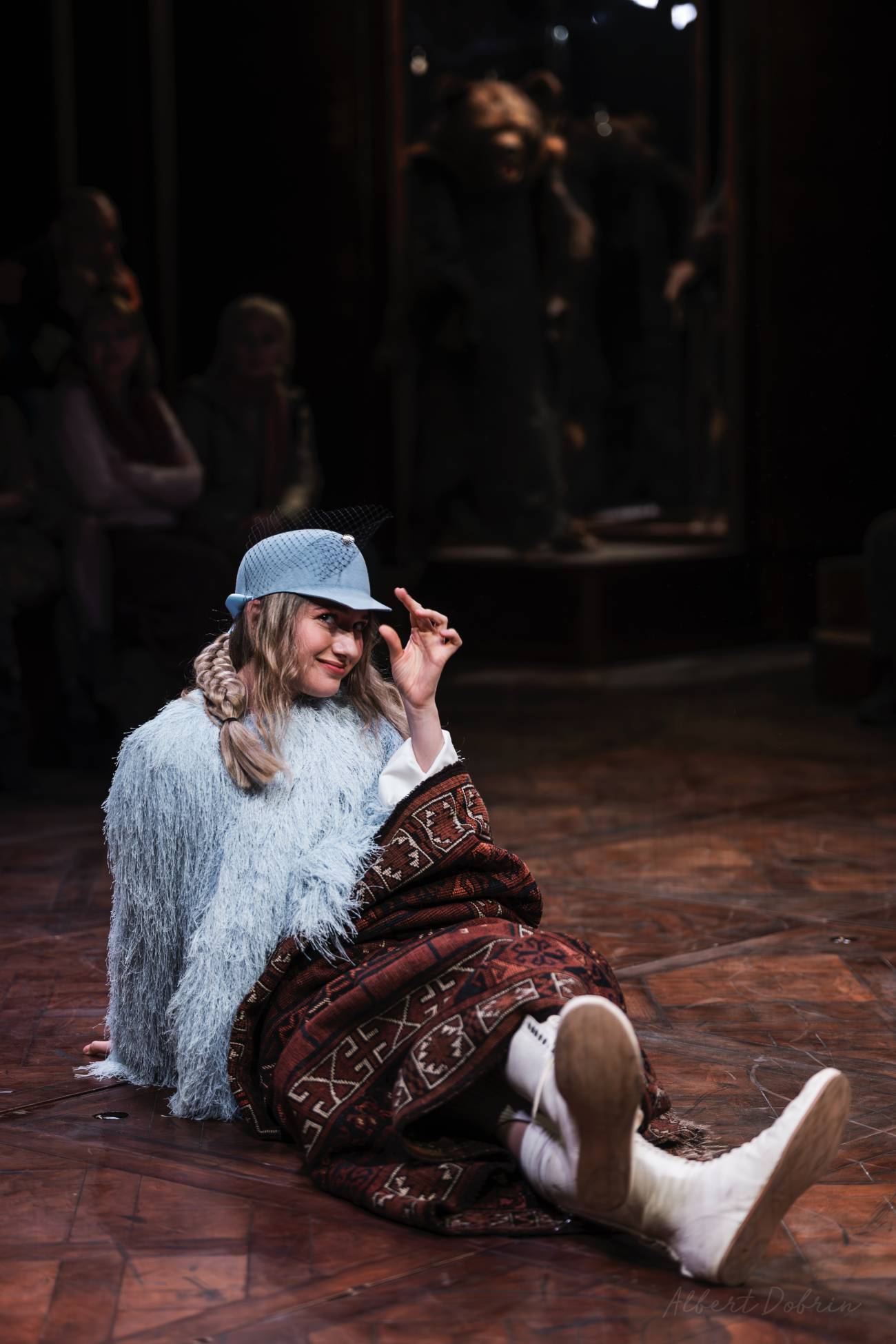
This is not a simple staging of a classic; what you see is not Chekhov reproduced, but Chekhov recalled into the dimension of a time that becomes both present and past. Măjeri’s Cherry Orchard does not perform magic, it creates hypnosis: it doesn’t fill you with illusions, but integrates you, transforms you, places you at the edge of the stage, between walls that seem to breathe and speak to you. It is a house, announced from the very beginning as the “Chekhov House,” which exists rather as a projection from the characters’ memories and expands according to the spectator’s perception. The space where ages fold into one another, with nostalgia, pain, and tenderness, is a childhood room whose door has long been closed by time, yet where the air still carries the scent of life. Perhaps someone died there long ago; and yet, strangely, nothing keeps you more alive than the memory of that place. [...] Liubov Andreevna Ranevskaya, portrayed by the wonderful Cerasela Iosifescu, is a miracle of fragility and grandeur at once. Dazed, adorable, dethroned, capricious, and Bovary-like, she walks among the ruins of her own life with an almost defiant grace. Her acting is always “through tears,” and you can feel how the entire house, the entire history of the Russian aristocracy, slips through her fingers. Anya, her daughter (Cristiana Luca), is a bird with too many, too colorful wings, ready to rise above any pain, even from her mother’s torn breaths. Varya, in Ecaterina Lupu’s interpretation, is a presence sifted through pain, a petrified, wounded being who radiates a beauty like that of a night that has swallowed the moon and stars, shining without reflection. Gaev (Liviu Manolache) is the tragically resigned one, whose optimism barely manages to smile through the ruins. Lopakhin, portrayed viscerally by Ștefan Mihai, disturbs the order of the old world through his ambition, becoming the master of the orchard, but this success intoxicates his mind and soul to a near-painful lucidity. Trofimov (Cătălin Bucur) is the new man, precise, ideological, while Pishchik (Remus Archip) radiates nobility within his own decline. Epikhodov, humble and humiliated, emerges as a quiet victor through Andrei Bibire’s performance; and Firs, memorably played by Mirela Pană, turns old age into a deafening, yet silent, cry of time (“my life has passed as if I never lived”). Dunyasha and Yasha complete the tableau with luminous presences, bursts of wounded beauty, visible even in the vibration of the air that preserves their passing.
Mirela Coman - Constănțeanul - Livada lui Măjeri sau o incursiune hipnotică în tremurul unei lumi
https://ctnl.ro/2025/livada-lui-majeri-sau-o-incursiune-hipnotica-in-tremurul-unei-lumi/
Drawing on the essential poetry of the dramatic story of people who almost meekly await their own ruin and exodus, refusing or endlessly postponing departure, Măjeri carefully seasons the narrative with subtle hints of contemporary flight (in doses perfectly measured to dispel boredom, yet without any discord that might disturb the atmosphere of the era). This atmosphere is delicately brought into the present under the pretext of Paris being “brought home” by Ranevskaya and Anya, French inflections intentionally sprinkled everywhere over the resigned Slavic orchard awaiting its axes. Meanwhile, he takes care to preserve the convention of play (or perhaps the characters’ refusal to grow up) within this Children’s Room of an old, dusty, decaying house. The parquet floor and the massive wooden furniture are excellently matched, ensuring unity and an organic coherence in the space we all belong to, a perfect setting for Gaev to dedicate odes to its centennial (!), as well as to what will rise and collapse from within it (!). [...] The solid directorial concept relies on the rich, substantial, inventive, daring, and infinitely playful acting of the Constanța ensemble, once again pushed to their limits (and once again achieving remarkable performances!), this time under the direction of Andrei Măjeri, who, in his first collaboration with this wonderful troupe, paints in exceptional colors the characters gathered under the roof of Chekhov’s House for the orchard’s wake. He subtly captures traits of the generations each might represent today, from the silent generation (merely evoked) to the boomers, Xs, Ys, and Zs, woven suggestively into their behavior, speech, costumes, and movements.
Luciana Antofi - Eseuri teatrale - Colț constănțean de iubire de teatru cu fereastră spre vișini: Andrei Măjeri, joacă de oameni mari în Camera copiilor din Casa Cehov de la malul mării
https://lucianaantofi.com/2025/10/24/colt-constantean-de-iubire-de-teatru-cu-fereastra-spre-visini-andrei-majeri-joaca-de-oameni-mari-in-camera-copiilor-din-casa-cehov-de-la-malul-marii/